
Nestled among the dramatic limestone mountains of Ha Giang, the Nho Que River is renowned for its emerald-green waters and breathtaking canyon scenery. A boat trip along this iconic river is one of the most unforgettable experiences on the Ha Giang Loop. This guide from Ha Giang Loop covers everything you need to know, from travel tips and ticket prices to the best times to visit.
What is Nho Que River and Why is it Emerald Green?
The stunning water body winding through the extreme northern frontier of Vietnam is a sight that leaves every traveler speechless. Understanding its geographical traits and natural makeup adds deep appreciation to your journey.
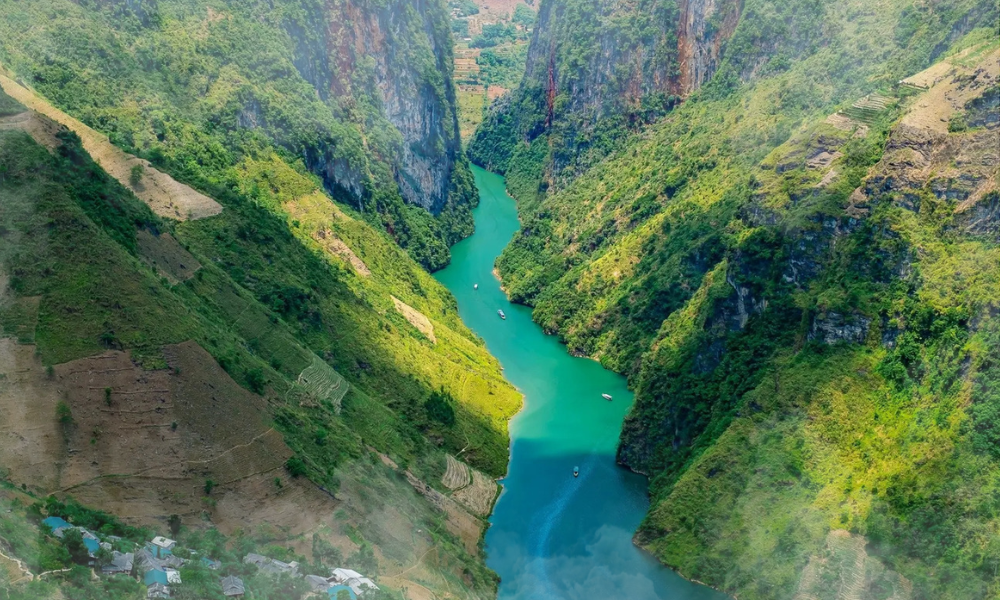
Geographical Origin and Flow
The river originates in the mountainous terrain of Yunnan, China, before crossing the international border into Vietnam at the sacred landmark of the Lung Cu Flag Tower. From there, it carves its way through the rugged landscape of Ha Giang, running along international borders and through deep valleys before merging with the Gam River system.
The Science Behind the Magical Color
The striking jade-green hue of the water is a result of the unique karst topography of the region. Because the river flows primarily through pure limestone formations, there is minimal muddy sediment or alluvial soil running into the water. Additionally, the construction of upstream hydroelectric dams has calmed the river’s current, allowing heavy particles to settle and leaving the surface incredibly clear and intensely green throughout the year.
How to Travel to the Nho Que River Boat Wharves Safely
Descending from the high mountain ridges down to the water level requires navigating incredibly steep roads and sharp switchbacks. To help you reach the banks securely, our team has detailed the two primary access points below.
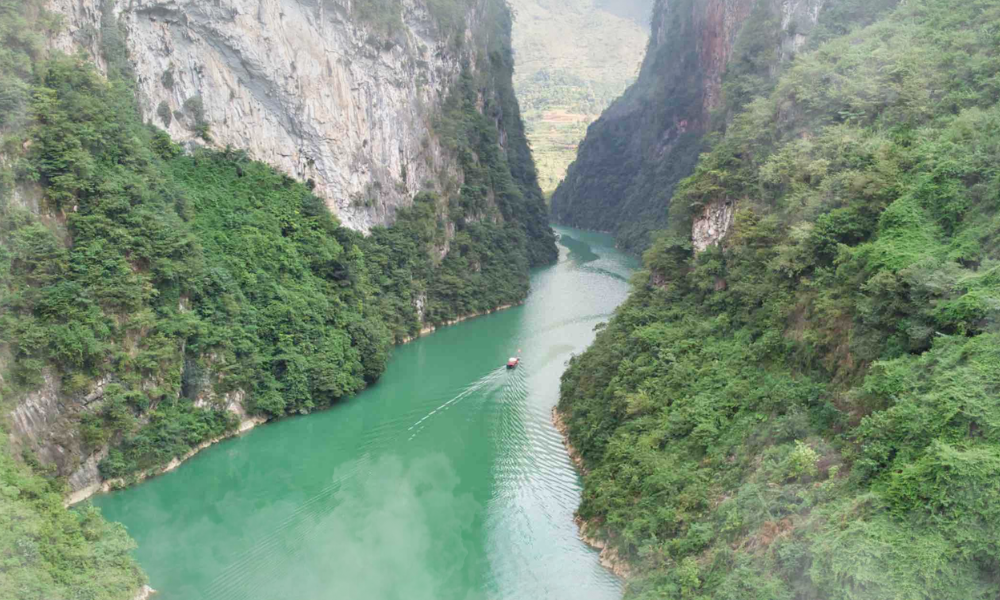
Before you reach this section of the loop, your riding skills will already be warmed up by conquering iconic terrain like the winding Tham Ma Pass and the challenging multi-tiered curves of Chin Khoanh Ramp. Once you arrive near the canyon, you have two choices for getting down to the riverbank:
Ta Lang Wharf (Pai Lung)
This is the most popular wharf for travelers, located directly at the foot of the mountains near Pai Lung village. The road down to Ta Lang is notoriously steep with a succession of extreme hairpin turns that drop rapidly over a short distance. If you are not an expert motorcyclist, it is highly recommended to park your vehicle at the top and hire a local motorbike taxi (xe om) to drive you down.
Xin Cai Wharf
Located further down in the neighboring district of Meo Vac, the path leading to the Xin Cai Wharf offers a slightly less intimidating descent compared to Ta Lang. While the drive takes a bit longer, it provides a smoother alternative for travelers who prefer a gentler gradient and want to enjoy a different perspective of the surrounding valley slopes.
Complete Price List for River Activities
Budgeting for your boat excursion is simple when you have access to the latest local service rates. Below is a comprehensive pricing breakdown compiled by our guides to help you plan your travel expenses.
| Service Category | Standard Price (VND) | Important Details & Notes |
| Motorboat Cruise Ticket | 100,000 – 120,000 | Includes a round-trip cruise through the canyon (approx. 45 minutes). |
| Self-Paddled Kayak Rental | 50,000 – 100,000 | Charged per person; allows you to explore at your own physical pace. |
| Local Motorbike Taxi (Xe Om) | 150,000 | Round-trip transit from the main road down to Ta Lang Wharf. |
Top Experiences on the Nho Que River That You Cannot Miss
Spending a few hours on these jade waters offers far more than a typical scenic boat ride. The surrounding geological formations create an interactive natural playground filled with unforgettable photo opportunities.
Before taking your boat, you will likely gaze down at the water from the breathtaking heights of the legendary Ma Pi Leng Pass, which serves as a natural observation deck over 1,200 meters above. Once you descend to the river level, make sure to check off these top-tier activities:
Cruising Through the Mighty Tu San Canyon
Tu San Canyon is recognized as the deepest canyon in Southeast Asia, featuring vertical limestone cliffs that tower up to 800 meters high. Standing on the deck of a motorboat as it glides between these colossal rock walls is a humbling experience that highlights the pure scale of Vietnam’s geology.
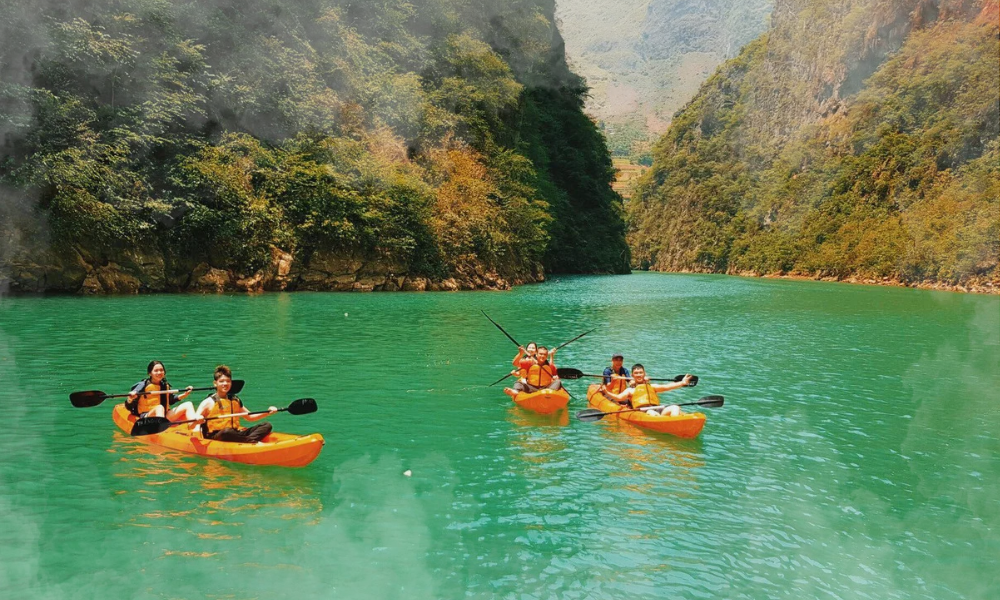
Kayaking Across the Emerald Waters
For travelers seeking a more active, immersive connection with nature, renting a kayak is the perfect choice. Paddling yourself across the calm, glassy surface of the water allows you to move at your own pace, get right up next to the limestone walls, and enjoy the absolute silence of the canyon.
Capturing Traditional Attire Photos on the Deck
The vivid green water and dark rock cliffs form a spectacular, high-contrast background for travel photography. Many travelers choose to rent colorful, traditional ethnic minority clothing at the wharf to wear during the boat ride, creating vibrant, culturally respectful images that stand out beautifully against the natural backdrop.
Best Season to Plan Your River Cruise
The appearance, water level, and overall climate around the valley change noticeably throughout the year. Choosing the right month ensures you experience the best visibility and most dramatic scenery.
| Time of Year | Highlights | Travel Notes |
| February – March | Red silk-cotton trees (Hoa Gao) bloom vividly along the riverbanks. | Ideal for nature lovers and photographers seeking colorful landscapes. |
| October – November | Cool, dry weather and hillsides covered with pink buckwheat flowers. | Considered one of the most beautiful times to visit the river valley and surrounding highlands. |
| June – August | Peak monsoon season with frequent heavy rainfall. | Water may turn muddy brown, reducing the river’s signature emerald-green appearance. |
When planning your broader itinerary around popular milestones like the historic Dong Van Old Quarter, matching your river visit with the local seasons is key. During these scenic periods, you can also easily combine your journey with cultural attractions such as the traditional Lo Lo Chai Village and the iconic stone walls of Pao’s House.
Essential Safety and Travel Tips for Visitors
Adventure travel in mountainous regions always demands a strong focus on personal safety and environmental respect. Adhering to these practical guidelines will guarantee a smooth, incident-free water excursion.
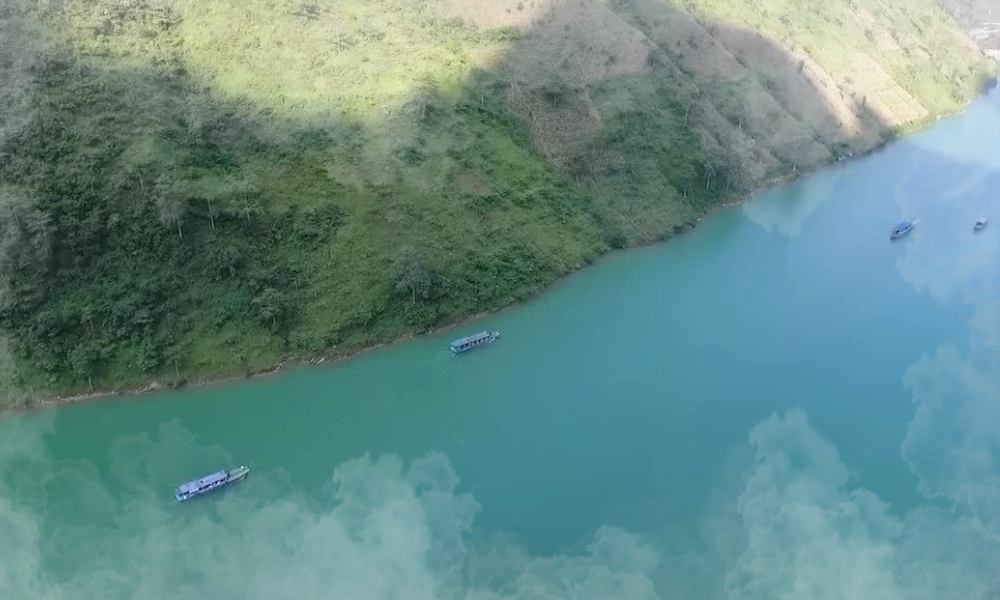
- Always Wear Your Life Jacket: The surface of the river looks completely calm, but the water is exceptionally deep reaching depths of dozens of meters in certain sections of the canyon.
- Do Not Risk Driving Tay Lang Alone: If you are operating a rental semi-automatic or automatic scooter and do not have extensive mountain experience, let a professional local driver handle the steep descent.
- Choose High-Contrast Outfits: To make your travel photos look spectacular, wear bright, solid colors such as white, yellow, or red, which pop beautifully against the emerald green water.
- Keep Your Electronics Waterproofed: Bring a reliable waterproof dry bag or a secure lanyard for your smartphone and camera gear to prevent accidental drops into the deep water during kayaking or boating.
Experiencing the breathtaking beauty of this emerald canyon is a highlight of any Ha Giang adventure, and traveling with a trusted local team makes the journey even more enjoyable. Ha Giang Loop offers safe, authentic tours led by experienced Easy Riders, complete with quality gear and reliable motorbikes. Visit hagianglooptourguide.com to book your trip and explore the best of Northern Vietnam, from the Nho Que River to the peaceful valleys of Du Gia. Contact Ha Giang Loop:
- Customer Service: +84-799-061-111
- Email: support@hagianglooptourguide.com
- Address: No 76D 19-5 Street, Ha Giang 1 Ward, Tuyen Quang, Vietnam 200000
