
Cool mountain air, winding limestone roads, and breathtaking views make Tham Ma Pass one of the most iconic highlights of the Ha Giang Loop. More than just a scenic stop, this legendary 9-turn pass marks the gateway to the Dong Van Karst Plateau. At Ha Giang Loop, our experienced Easy Riders help travelers experience this unforgettable route safely while discovering the raw beauty of Northern Vietnam.
Where is Tham Ma Pass and How to Map Your Journey?
Understanding the exact geographical layout of this legendary pass is crucial before you turn the ignition key and engage the clutch. Our operations team at Ha Giang Loop maps out every contour of the route to ensure our riders transition flawlessly from the low river valleys into the high rocky plateaus.
Geographical Coordinates and Territorial Border
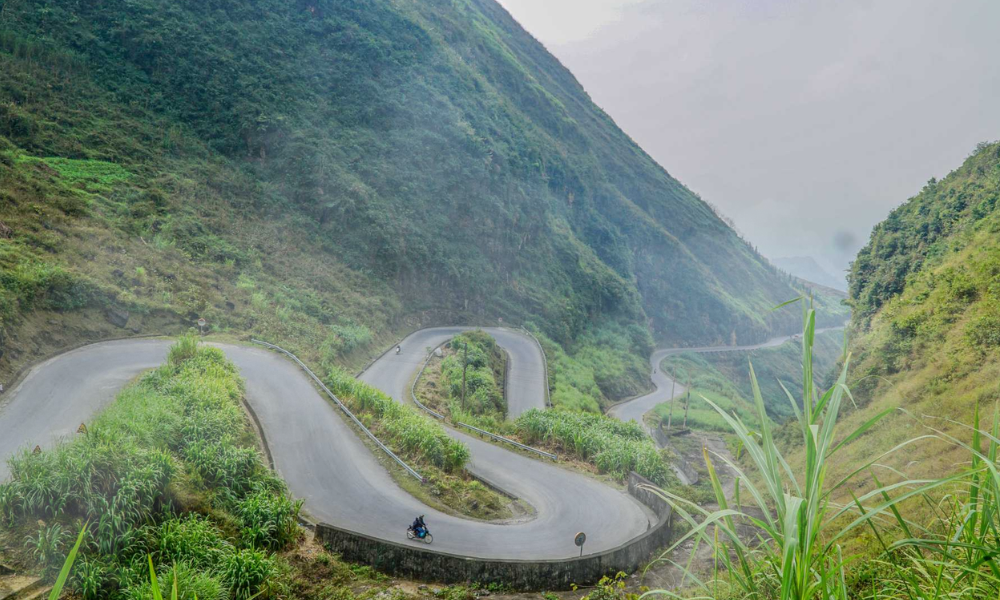
The iconic Tham Ma Pass is situated on the historic National Route 4C, acting as a dramatic natural mountain border separating the rugged territory of Yen Minh District from the high-altitude terrains of Dong Van District. The pass itself spans a compressed length of roughly 5 kilometers, but its architectural genius lies in its nine perfectly sculpted, interconnected U-shaped curves that climb steeply against a near-vertical rock face.
Strategic Position on the Full Loop Itinerary
This spectacular ridge line serves as the crucial opening act that prepares your wheels for the increasingly wild and remote geographical wonders hidden deeper within the frontier. By following our professional route maps, your motorcycle will seamlessly transition across the landscape using a highly logical sequence of landmarks:
- The Northern Frontier Ascent: After mastering the sharp switchbacks of the Tham Ma Pass, the road immediately drops you into the ancient stone settlements of Pho Cao before challenging your gear management at the steep Chin Khoanh Ramp.
- The Cultural Heartlands: From there, our expert guides navigate you through the cinematic courtyards of Pao’s House in Sung La Valley, leading directly to the vibrant trading streets of the historic Dong Van Old Quarter.
- The Extreme Elevations: The journey then climbs to the absolute northernmost point of Vietnam at the Lung Cu Flag Tower and the nearby traditional borders of Lo Lo Chai Village.
- The Grand Finale: To complete the legendary loop, we conquer the terrifying, precipitous drop-offs of the mighty Ma Pi Leng Pass, cruise the canyon floor along the emerald Nho Que river, ride through the remote trading hub of Meo Vac, and finally search for inner peace in the lush valleys of Du Gia.
Why Tham Ma Pass Is Known as the Legendary Horse-Testing Slope?
Long before modern asphalt and performance exhaust systems arrived in the northern highlands, this specific slope held a massive functional importance for the survival of the indigenous ethnic minority groups.
The deep historical mythology of Tham Ma Pass transforms a standard asphalt road into an educational cultural monument that speaks volumes about the resilience of the local H’Mông people.
The Ultimate Test of Upland Equine Stamina
In the ancient local dialect, the name of the Tham Ma Pass translates directly to “The Slope that Appraises the Endurance of Horses.” In the centuries before motorized transport existed, tribal traders relied completely on pack horses to carry heavy loads of mountain herbs, corn, and rock salt across the steep mountain ranges.
To identify the strongest animals, merchants would force the horses to carry immense loads from the base of the mountain all the way to the summit; those who arrived with steady breathing and strong legs were kept as prized stock, while those who collapsed were deemed unfit for the harsh highland life.
The Modern Human Test of Mental Resolve
In the modern era, the pass has evolved from testing four-legged pack animals to evaluating the focus, bravery, and psychological resolve of two-wheeled travelers. Navigating the rhythmic, rapid sequence of blind corners forces riders to enter a meditative state of absolute concentration, making the summit a badge of honor for any motorcyclist.
Chrono-Atmosphere: The Microclimates of the Pass
The environmental conditions surrounding this high-altitude ridge line are notoriously unpredictable, shifting from sun-drenched stone to dense fog within a matter of minutes. Keeping a close eye on these rapid seasonal transitions allows our team at Ha Giang Loop to curate the safest possible departure windows for our tour groups.
Summer Monsoons and Golden Autumn Landscapes
From May to August, the summer sun illuminates the limestone cliffs, causing lush green corn fields to pop directly out of the grey rock formations, though sudden afternoon monsoons can turn the road surface slick. Between September and November, the humidity drops significantly, presenting riders with endless daytime visibility, comfortable riding temperatures, and valleys painted bright yellow by ripening terraced rice fields.
The Winter Mist and Vibrant Upland Springs
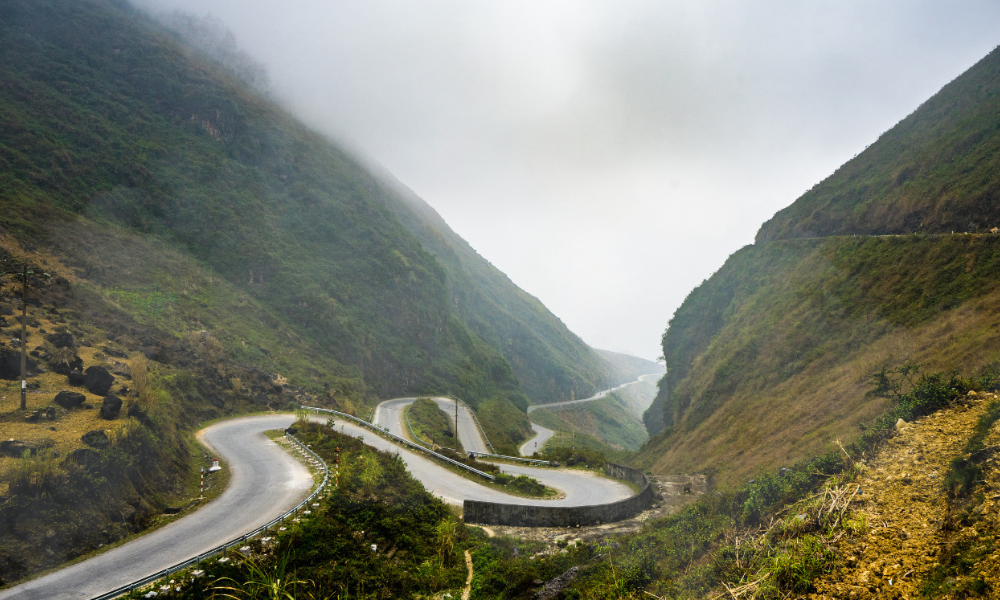
Winter brings a heavy, eerie atmosphere as thick valley fog wraps around the mid-sections of the Tham Ma Pass until late afternoon, lowering temperatures down to single digits. However, as the new year begins, this cold stone landscape undergoes a beautiful transformation as massive blankets of pink peach blossoms and white plum flowers soften the rugged edges of the highway.
| Atmospheric Phase | Environmental Catalyst | Technical Riding Difficulty |
| The Sunlit Monsoon (May – August) | High heat, sudden heavy rain, green corn fields. | Moderate: Watch out for wet asphalt and mountain runoff. |
| The Golden Horizon (September – November) | Dry air, crystal clear visibility, rice harvest. | Optimal: Ideal conditions for lean angles and photography. |
| The Mystic Solstice (December – March) | Dense valley fog, freezing wind, spring blossoms. | Advanced: Low visibility requires defensive headlight usage. |
Unmissable Experiences at the Crest of the Pass
Reaching the final, sweeping exit of the ninth curve brings you to a massive gravel pull-off that offers one of the most recognized and celebrated vistas in all of Southeast Asia. Pausing at the peak of the Tham Ma Pass allows you to process the sheer scale of the landscape you have just climbed while engaging directly with the human element of the mountains.
The Iconic Cinematic Panorama Shot
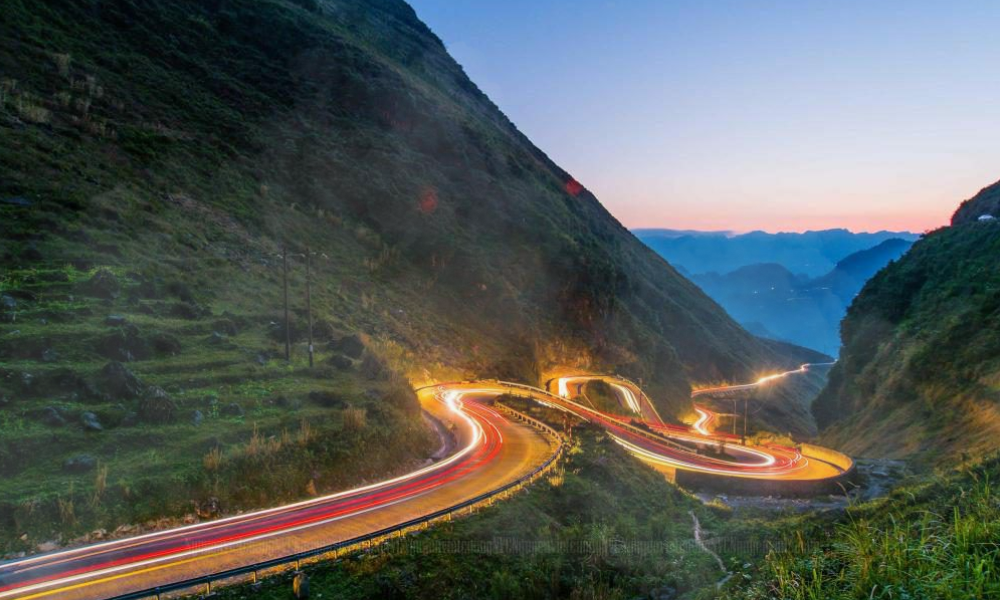
From the designated viewing platforms built safely along the rocky cliff edges, you can look straight down into the mountain canyon to track the path you just rode. The road below looks like a giant, discarded silver ribbon dropped carelessly between two massive limestone fortresses, creating a perfect geometric contrast that is a dream for professional landscape photographers.
Cultural Interactions with the Children of the Loop
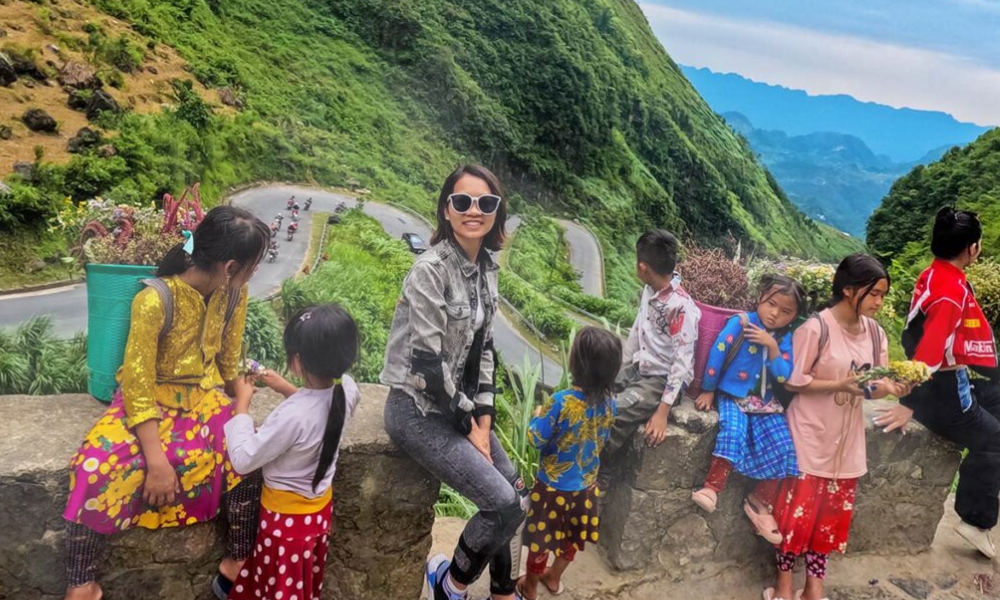
The summit parking area is a regular gathering place for young H’Mông children dressed in beautiful, hand-woven traditional attire decorated with intricate silver coins. They carry hand-made bamboo baskets filled with freshly picked buckwheat flowers and wild daisies; interacting with them respectfully offers a touching, genuine insight into the innocent spirit of the upland communities.
Tham Ma Pass Riding Guide: Conquering the Nine Sharp Turns
Attempting to navigate the extreme vertical alignment and tight radius corners of this pass without a strict defensive strategy can lead to severe mechanical strain or a dangerous collision. Our veteran road captains have put together these crucial safety parameters to ensure you glide through the curves with absolute confidence.
Dynamic Gear Control and Engine Braking
When ascending the steep incline of the Tham Ma Pass, lock your motorcycle’s transmission into a low, high-torque gear (typically second gear on standard 135cc-150cc semi-automatics or manual bikes) to prevent the engine from stalling. When descending the opposite side, never shift into neutral or hold the clutch down continuously; allow the compression of the engine to naturally control your speed, preventing your brake pads from overheating and fading.
Blind-Corner Trajectories and Heavy Vehicle Defense
Always maintain a conservative, defensive lane position by staying toward the outer edge of your lane, as local commercial trucks frequently cross over the yellow line when struggling up the steep hairpins.
Furthermore, always sound your horn twice before entering any blind, rock-faced corner to make your presence known to oncoming traffic that might be descending too quickly. If your personal experience on mountainous terrain is limited, protect your safety by booking a premium Easy Rider tour at https://hagianglooptourguide.com/ to ride on the back of a professional driver’s bike.
There is nothing quite like standing at the summit, looking down at the legendary loops of Tham Ma Pass, and realizing your view of the open road has changed forever. Let Ha Giang Loop handle the tricky navigation, heavy mechanics, and local connections. Your only job? Experience the pure, unedited thrill of a lifetime. Book your epic 2026 ride today! Contact Ha Giang Loop:
- Customer Service: +84-799-061-111
- Email: support@hagianglooptourguide.com
- Address: No 76D 19-5 Street, Ha Giang 1 Ward, Tuyen Quang, Vietnam 200000
