
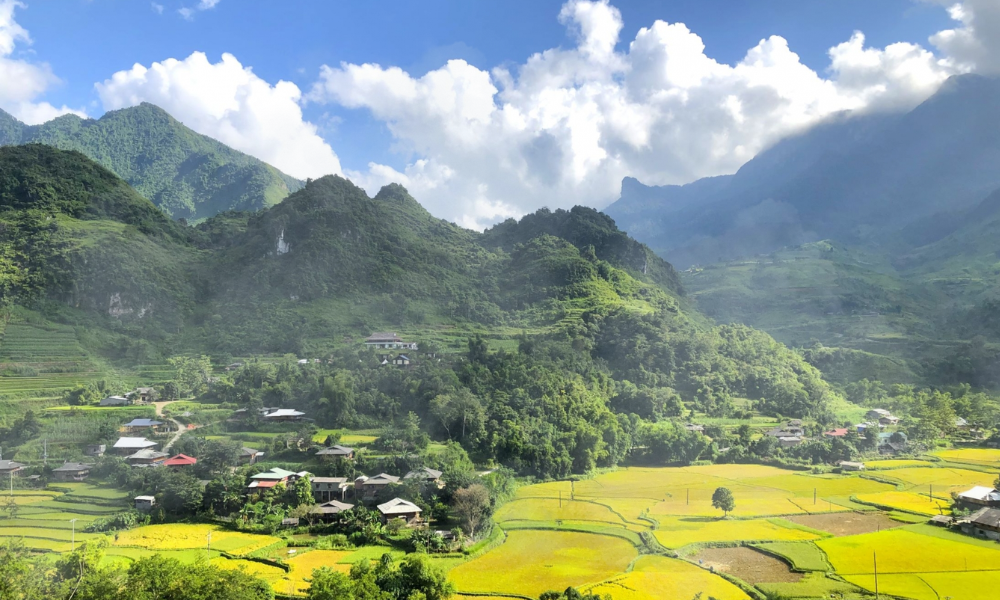
Welcome to Du Gia, a peaceful gem nestled in Northern Vietnam’s rugged mountains. Unlike the region’s dramatic limestone peaks and winding passes, this lush green valley offers a tranquil escape and an authentic look at local tribal life. At Ha Giang Loop, we consider Du Gia the perfect “soul-healing” stop on the Ha Giang Loop, far from the usual tourist crowds.
Where is Du Gia and How to Get There?
Navigating the remote paths to this hidden gem requires conquering some of the most spectacular yet technically demanding mountain roads in Southeast Asia. Our veteran Easy Rider drivers at Ha Giang Loop ensure a safe, smooth journey through these sweeping elevations so you can focus entirely on the jaw-dropping vistas.
The Ultimate Loop Route Breakdown
On our signature multi-day itineraries, we guide you through the region’s legendary highlights, beginning with the thrilling curves of Tham Ma Pass and the steep zigzags of Chin Khoanh Ramp. After immersing yourself in the cinematic history of Pao’s House, you will wander through the timeless stone alleys of the Dong Van Old Quarter.
From there, our journey takes us to the northernmost frontier at the Lung Cu Flag Tower and the nearby cultural enclave of Lo Lo Chai Village. Finally, we conquer the legendary Ma Pi Leng Pass, gaze down at the majestic emerald waters of the Nho Que river, and pass through the rugged trading hub of Meo Vac before descending into the tranquil, isolated valley of Du Gia.
Road Conditions and Navigation Challenges
The final 40-kilometer stretch leading into the valley from Mau Due or Meo Vac is notoriously rugged, filled with loose gravel, sharp switchbacks, and narrow passes cliffside. While seasoned riders find the raw terrain exhilarating, it demands immense concentration, excellent clutch control, and functional brakes. Traveling with a professional guide ensures you avoid dangerous blind spots and unexpected potholes caused by seasonal mountain runoffs.
The Best Time to Experience the Magic of Du Gia
Timing your journey perfectly allows you to witness the dramatic seasonal transformations of this isolated highland paradise. Whether you prefer swimming under warm sunshine or photographing misty mountain peaks, this detailed seasonal breakdown will help you plan your ideal adventure.
| Season / Month | Weather & Landscape | Best For |
| May – August (Summer) | Warm, sunny days (28°C – 34°C) with occasional refreshing highland downpours; valleys are filled with lush, vibrant green corn and rice paddies. | Swimming in the deep natural pools, cliff jumping, and enjoying clear blue skies for photography. |
| September – November (Autumn) | Cool, crisp mountain air (18°C – 24°C); terraced fields turn a brilliant golden yellow, followed by the blooming of pink buckwheat flowers. | Trekking through ethnic villages, landscape photography, and pleasant, sweat-free riding conditions. |
| December – March (Winter/Spring) | Chilly, atmospheric mornings with thick valley fog; hillsides light up with white plum blossoms and pink wild peach flowers. | Experiencing authentic local life by the woodfire hearth, drinking hot tea, and enjoying cultural festivals. |
Unmissable Experiences in Du Gia
This peaceful commune offers a stark, refreshing contrast to the barren, rocky landscapes found earlier on the northern loop. From adrenaline-pumping water sports to deeply immersive cultural encounters, here are the absolute highlights of your stay in the valley.
Conquer the Du Gia Waterfall (Tham Luong Waterfall)
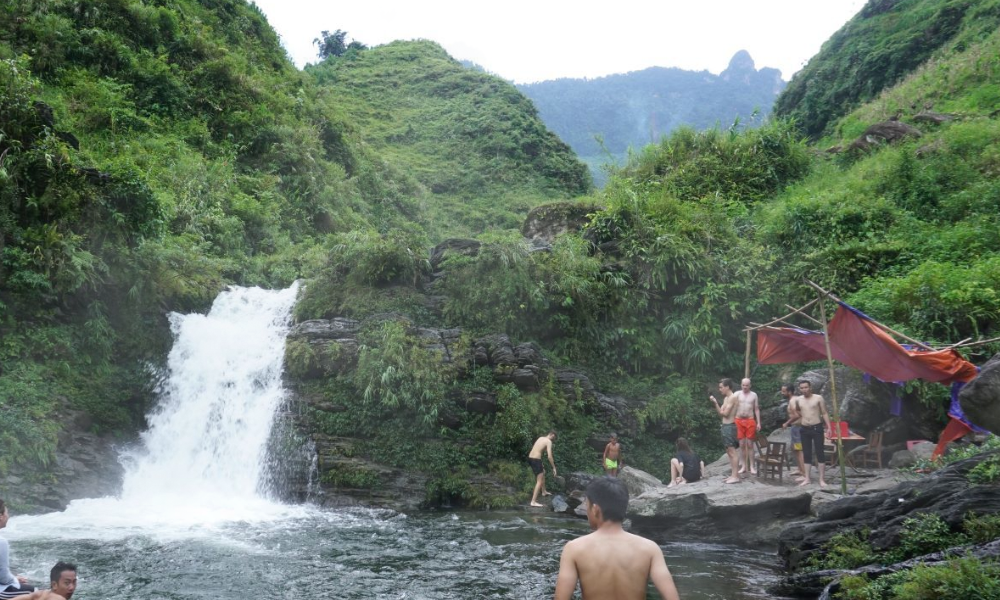
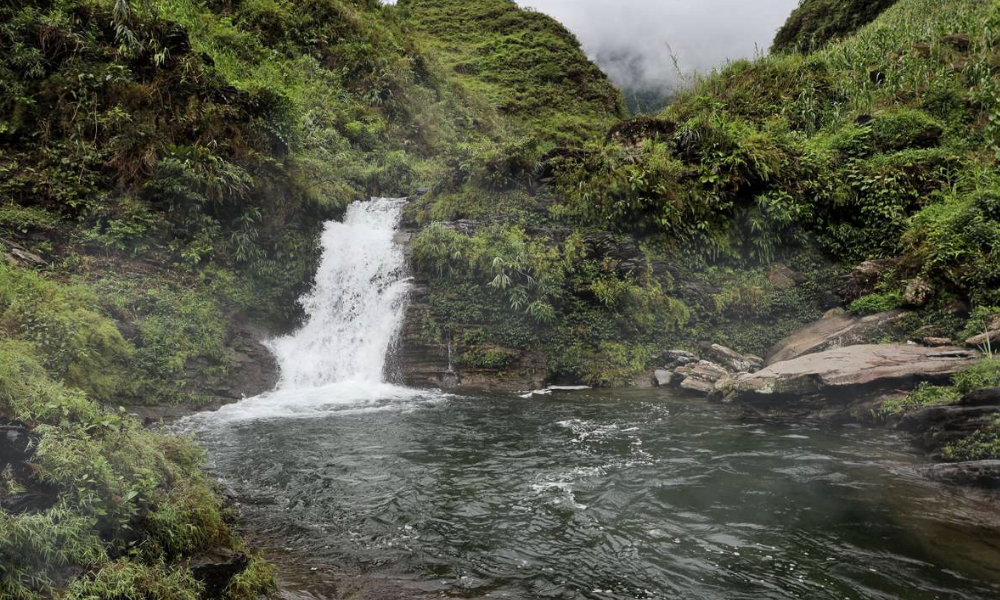
Located roughly 4 kilometers from the main village center along a bumpy dirt path, this pristine waterfall cascades from a height of over 6 meters into a crystal-clear, deep blue natural basin.
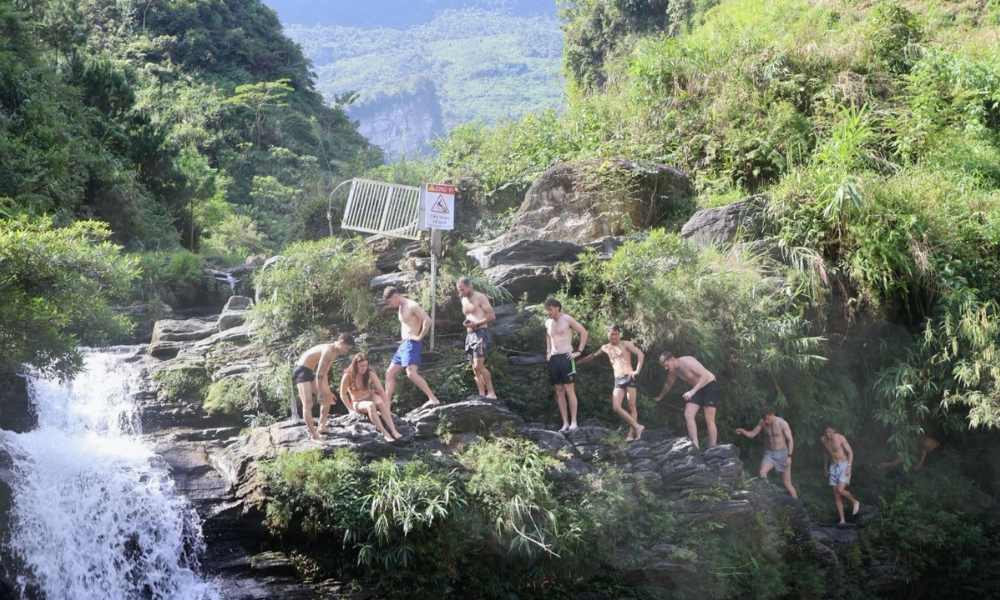
Surrounded by dense jungle vegetation and smooth, sun-warmed boulders, it has become a legendary gathering spot for international backpackers looking to experience cliff jumping from safe rocky ledges. The water remains cool and refreshing year-round, making it the ultimate reward after a long, dusty day of riding through the mountains.
Immerse Yourself in the Friday Market and Phong Luu Love Market
Unlike the heavily commercialized markets found in larger towns, the weekly Friday morning market here remains a purely authentic social and trading gathering for the Tay, H’Mông, and Dao ethnic groups. Locals dress in their finest, hand-embroidered traditional garments to trade everything from colorful textiles and mountain herbs to upland livestock. If you are lucky enough to visit during the second lunar month, you can witness the rare Phong Luu Love Market, an ancient tradition where former lovers reunite to share life updates, sing romantic folk songs, and celebrate enduring friendships without jealousy.
Where to Stay and What to Eat in Du Gia
Embracing the traditional lifestyle of the local ethnic minorities is an essential part of making your mountain journey truly unforgettable. At Ha Giang Loop, we handpick sustainable, locally-owned accommodations that directly support the community while providing clean, comfortable amenities.
Authentic Wooden Stilt Homestays
Instead of concrete hotels, accommodation in this peaceful valley consists almost entirely of traditional wooden stilt houses converted into welcoming homestays. Renowned spots like Du Gia LoLo Homestay and To Day Village offer panoramic, unobstructed views of the surrounding rice terraces and misty mountain ridges. Guests sleep on comfortable mattresses equipped with mosquito nets, enjoying a rustic yet incredibly cozy atmosphere that fosters deep connections with the host families.
The Legendary “Family Dinner” and Upland Feasts
Every evening, the homestay hosts prepare a massive, communal “family dinner” where travelers from all over the world gather around large wooden tables to share stories and laughter. You will feast on locally sourced ingredients, including crispy fried creek fish, free-range jungle chicken seasoned with mountain herbs, wild bamboo shoots, and stir-fried mustard greens. The highlight of the night is participating in the lively local ritual of drinking traditional corn wine, affectionately known as “happy water,” accompanied by endless toasts of “Mot, Hai, Ba, Dzo!”
Essential Travel Tips for a Flawless Trip
Venturing into the remote, mountainous highlands requires careful preparation to ensure your personal safety and maximize your overall enjoyment. These practical insider recommendations from our team will help you pack intelligently and travel responsibly through the valley.
- Mechanical Inspections: The steep descents into the valley put extreme stress on your vehicle; always double-check your brakes, chain tension, and tire tread before leaving Meo Vac or Mau Due.
- Financial Preparation: There are absolutely no ATMs or banks operating within this remote commune, meaning cash is king; carry enough Vietnamese Dong (VND) to cover your meals, drinks, and handmade souvenirs.
- Packing Essentials: Bring a proper swimsuit and quick-dry towel for the waterfall during the day, but pack a warm fleece or windbreaker jacket because temperatures drop sharply once the sun goes down.
- Sustainable Tourism: Respect the local culture by dressing modestly when walking through the villages, asking permission before taking photos of elders or children, and strictly avoiding littering around the pristine water sources.
- Travel with the Experts: To navigate these hazardous mountain terrains with absolute peace of mind while unlocking deep cultural insights, book a premium Easy Rider or self-drive tour directly at https://hagianglooptourguide.com/.
Skip the commercialized tourist traps and discover Du Gia – a true untouched paradise capturing the raw, wild spirit of Vietnam’s final frontier. Let Ha Giang Loop take all the stress out of navigation, bike maintenance, and planning. We keep you safe and on track, leaving you free to experience the ultimate, pure-adrenaline ride of a lifetime! Contact Ha Giang Loop:
- Customer Service: +84-799-061-111
- Email: support@hagianglooptourguide.com
- Address: No 76D 19-5 Street, Ha Giang 1 Ward, Tuyen Quang, Vietnam 200000
