When you ride the legendary Ha Giang Loop, one of Vietnam’s most spectacular road trips, discovering the Dao People of Ha Giang adds another layer to the journey beyond its jaw-dropping mountain passes. The other half of the story lies in the people who call these peaks home and none are more visually striking than the Dao, with their distinctive traditions, clothing, and spiritual heritage.
Who are the Dao People?
The Dao people (also spelled Yao) are one of Vietnam’s 54 officially recognized ethnic groups, with a population deeply rooted in the northern highlands. In Ha Giang Province alone, the Dao make up approximately 14.9% of the population, making them the third-largest ethnic group in the region after the Hmong and Tay.
Ha Giang is home to 19 different ethnic groups, with nearly 90% of its population belonging to an ethnic minority. This makes the province one of the most culturally rich frontiers in Southeast Asia and the Dao are undeniably one of its most fascinating threads. The Dao trace their origins to southern China, migrating into Vietnam’s mountainous north centuries ago. Their culture is a living tapestry of Taoist spirituality, animist beliefs, and ancient agricultural wisdom passed down through generations.
Meeting the Dao on Your Ha Giang Loop itinerary
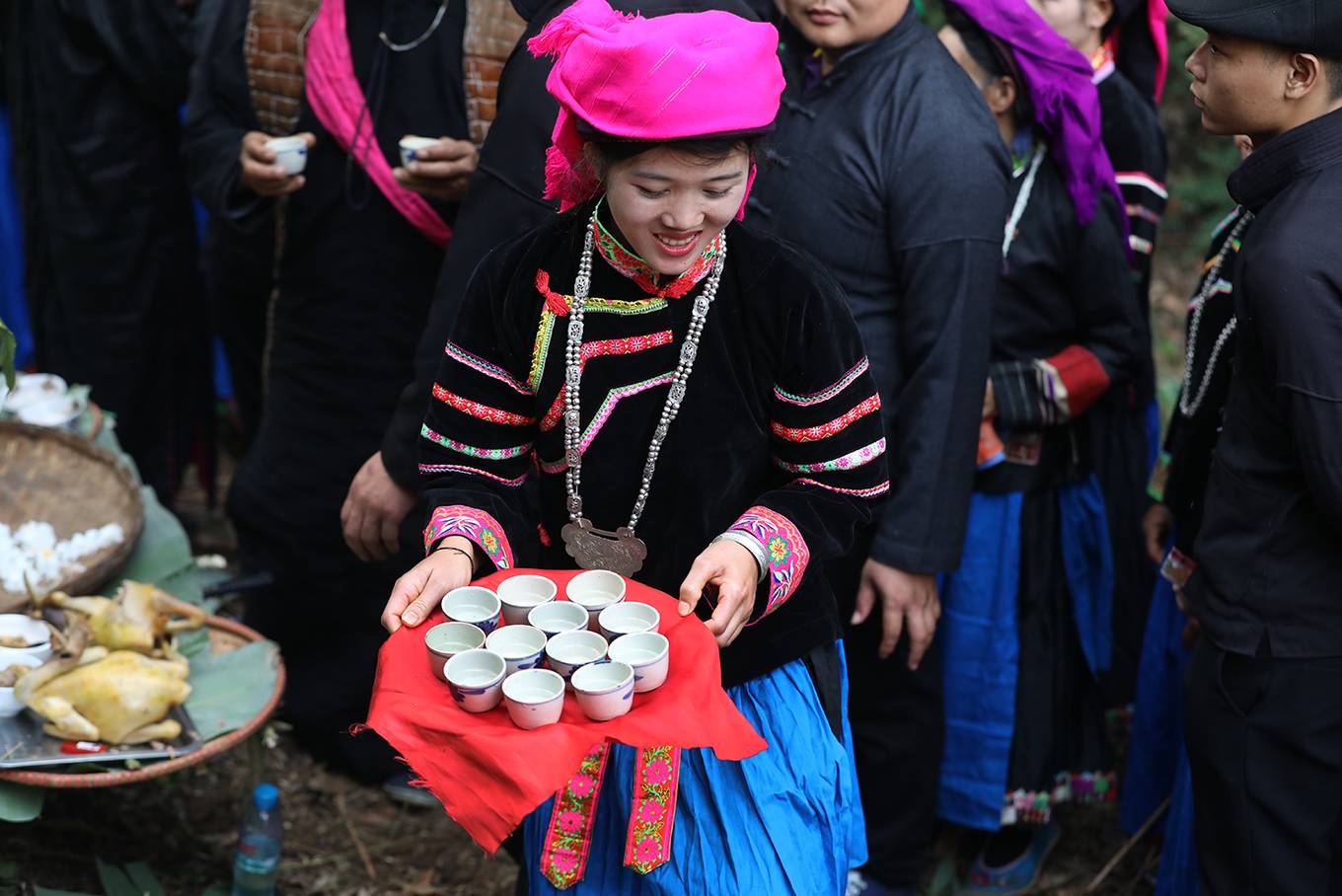
A typical Ha Giang Loop tour spans 4–5 days and covers approximately 500–600 km of dramatic mountain roads. While most travelers come for the adrenaline of passes like Bac Sum Pass, Tham Ma Pass, and the legendary Ma Pi Leng Pass, the real magic happens when you slow down and step into the ethnic villages scattered along the route. Starting from Ha Giang City, the classic Ha Giang Loop itinerary winds through Quan Ba, Yen Minh, Dong Van, Meo Vac, and Du Gia each region home to distinct Dao communities. Whether you’re riding a motorbike or joining a guided motorcycle journey, you’ll spot Dao women in vibrant traditional dress walking the same mountain paths their ancestors have trod for centuries.
The Dao Sub-Groups you’ll meet along the loop
Not all Dao are the same. As you travel the loop, you’ll encounter several distinct sub-groups, each with its own identity:
| Sub-Group | Key Identifier | Where to Spot Them |
| Red Dao (Dao Đỏ) | Bright red headscarves, elaborate embroidery | Nam Dam, Hoang Su Phi, near Heaven Gate |
| Black Dao (Dao Đen) | Darker, simpler indigo attire | Yen Minh, Dong Van |
| Dao Tien (Money Dao) | Distinctive silver coin jewelry, long skirts | Quan Ba area |
| Dao Thanh Phan | Unique linguistic and costume variations | Remote villages |
| Dao Ao Dai | Long-dress style garments | Scattered across Ha Giang |
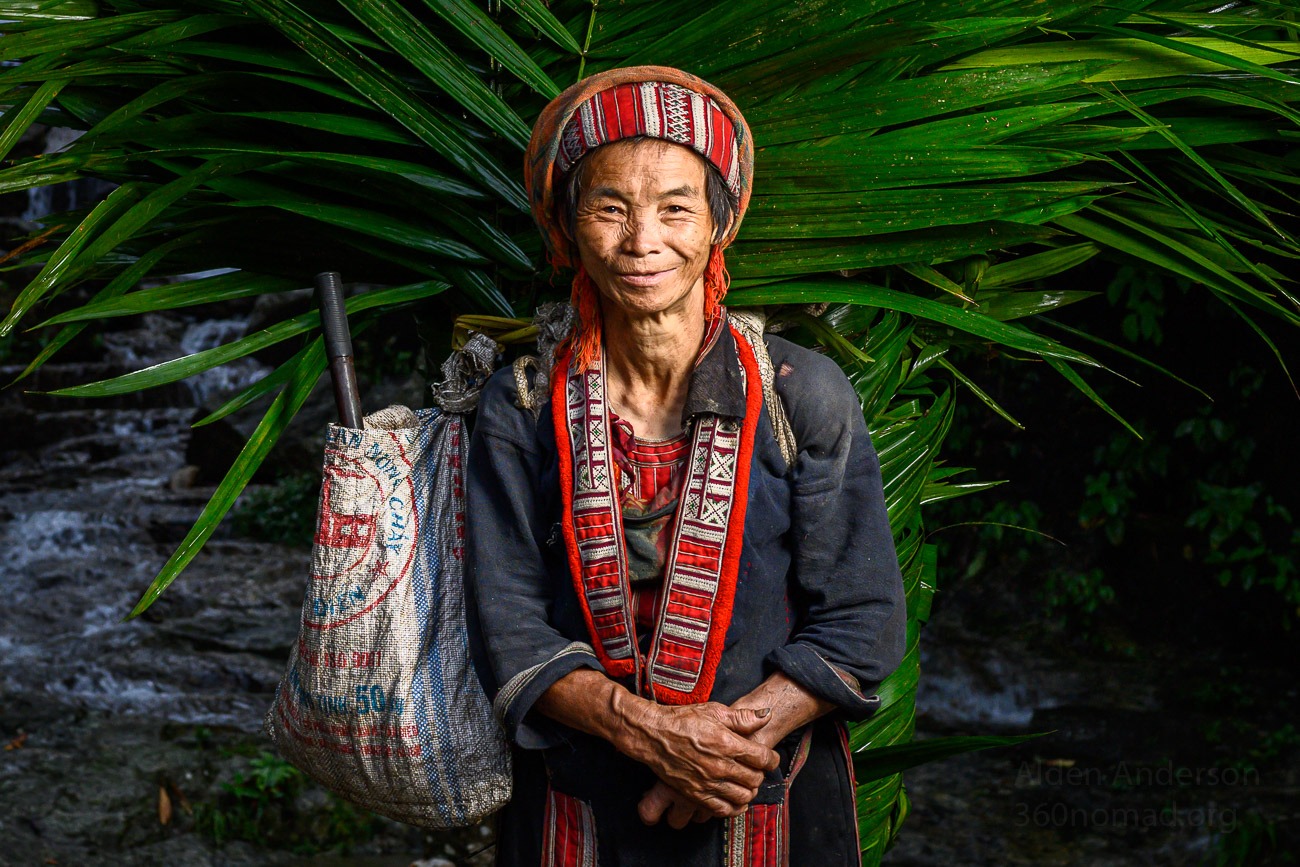
The Red Dao are the most photogenic and frequently encountered by travelers. Their women wear intricately embroidered indigo clothing accented with scarlet turbans and heavy silver jewelry, a look that has become iconic to the Ha Giang Loop experience.
Traditional clothing: More than just fabric
Dao traditional dress is a masterpiece of craftsmanship. A complete women’s outfit includes:
- Indigo-dyed tops and skirts handwoven and batik-printed using beeswax-resist techniques
- Elaborate embroidery featuring stylized dogs, eight-petal flowers, and nature motifs believed to offer protection
- Silver jewelry necklaces, earrings, and headpieces that signify wealth and spiritual status
- Signature headscarves red for Red Dao, black or dark blue for other sub-groups
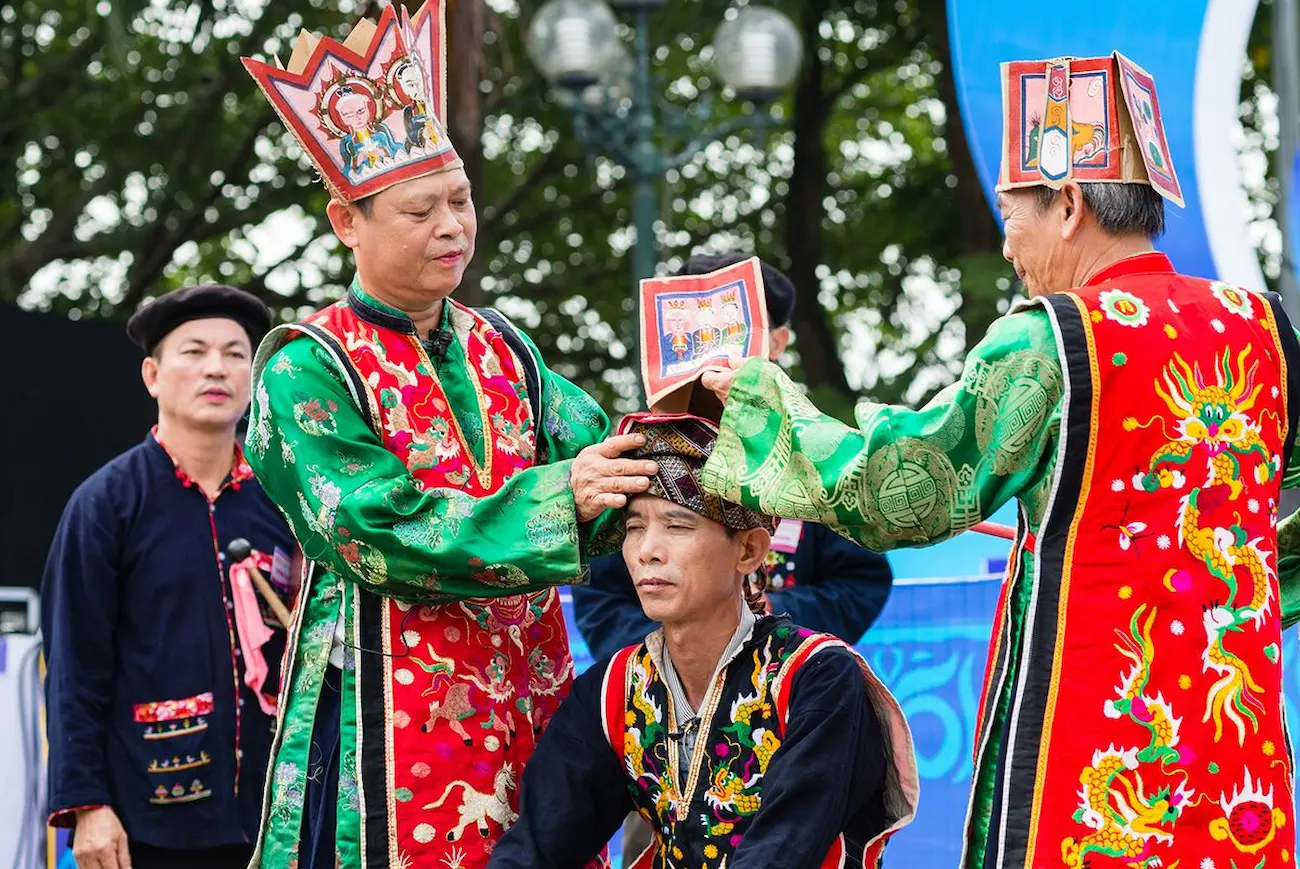
The indigo dyeing process alone can take months. Cotton is woven on traditional looms, patterns are drawn with melted beeswax, and the fabric is repeatedly dipped in indigo baths before the wax is dissolved in hot water to reveal the design. Men’s attire is simpler but no less meaningful. During the Cap Sac (coming-of-age) ceremony, Dao men don ceremonial garments nearly as elaborate as the women’s, complete with embroidered belts and traditional headwear.
Spiritual Life: Cap Sac, Herbal Medicine & Taoist Beliefs
Spiritual life holds a central place in Dao culture, shaping the community’s traditions, healing practices, and relationship with nature. From the sacred Cap Sac ceremony to generations-old herbal medicine and Taoist beliefs, these traditions offer a deeper glimpse into the spiritual heritage of Dao communities in northern Vietnam.
The Cap Sac Ceremony
The “Lễ Cấp Sắc” is a defining ritual of Dao culture. Held when a boy reaches around 13 years old, this three-day, three-night ceremony marks his spiritual maturity. Through chanting, drumming, and firelit rituals, the young man is granted permission to perform spiritual rites and participate in community decision-making. It’s a profound initiation that blends Taoist cosmology with ancestral worship.
Herbal Medicine Masters
The Dao are renowned throughout northern Vietnam as herbal medicine experts. Their encyclopedic knowledge of medicinal plants passed from shaman to apprentice across generations is used to treat everything from common colds to chronic ailments. Visitors to Dao villages can experience this firsthand through traditional herbal baths, a therapeutic soak using locally grown medicinal herbs that soothes tired muscles after a long day navigating Bac Sum Pass or Tham Ma Pass on your motorcycle journey.
Spiritual Beliefs
At the heart of Dao spirituality lies a belief in harmony between humans and nature. Shamans act as intermediaries between the physical and spirit worlds, conducting ceremonies to heal illness, protect villages, and communicate with ancestors. This worldview shapes everything from their farming practices to their architecture.
Where to experience Dao culture on the Ha Giang Loop
The Ha Giang Loop offers travelers plenty of opportunities to experience Dao culture beyond the region’s dramatic mountain scenery. From community-based tourism villages to remote highland settlements, each destination provides a different perspective on the traditions, daily life, and cultural heritage of the Dao people.
Nam Dam Village (Quan Ba District)
Often the first cultural stop on the Ha Giang Loop, Nam Dam is a Dao community tourism village just 45 km from Ha Giang City, not far from the famous Heaven Gate and Twin Mountains. Here you can:
- Stay in a traditional “trình tường” (rammed-earth) house cool in summer, warm in winter
- Watch Dao women weave and embroider traditional clothing
- Enjoy home-cooked traditional mountain cuisine from the ever-burning kitchen stove
- Take a rejuvenating herbal bath a must after tackling the winding roads
- Hike to nearby Kho My Cave (25 km away)
The village operates on a unique community model: tourism earnings are partially contributed to a village fund that maintains security and preserves cultural identity.
Hoang Su Phi
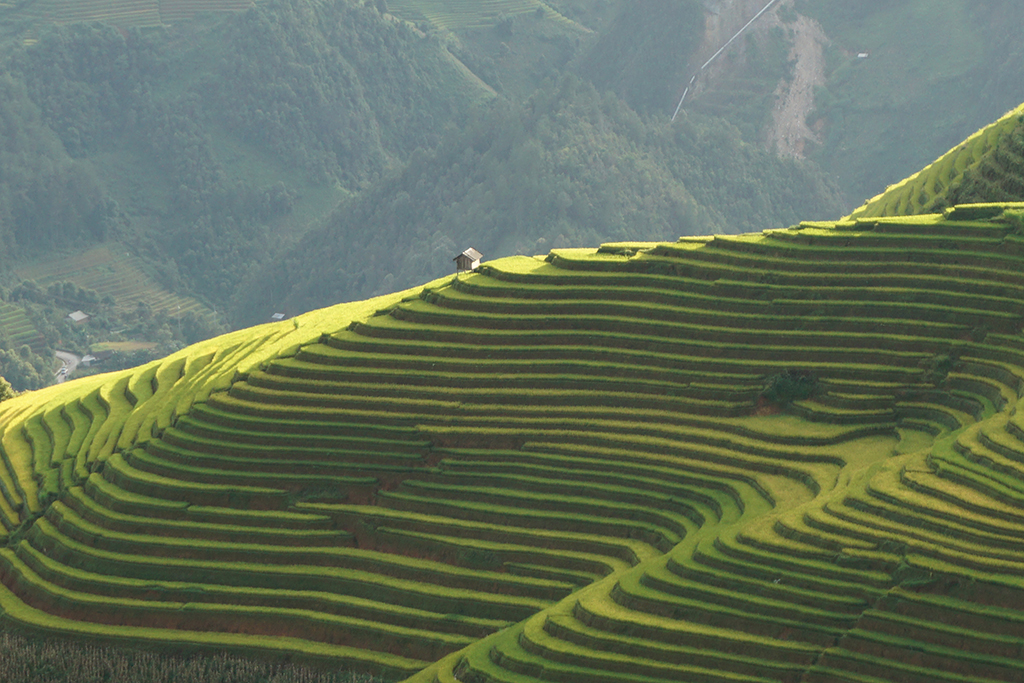
Famous for its golden terraced rice fields (especially in September–October), Hoang Su Phi is prime Dao territory. The Red Dao here still practice centuries-old rice cultivation techniques on breathtaking hillside terraces. This is where you’ll get the iconic shots of Dao women in red headscarves working among the paddies, a highlight of any authentic adventure on the less-touristy side of northern Vietnam.
Du Gia Area
On the quieter eastern stretch of the loop, Du Gia (also called Du Gia Village) offers a more off-the-beaten-path encounter with Dao and Tay communities, plus a refreshing swim at Du Gia waterfall. It’s the perfect place to unwind after the intensity of Ma Pi Leng Pass and Meo Vac.
Dong Van Old Quarter & Sa Phin
While Dong Van Old Quarter is famous for its Hmong heritage, the surrounding Dong Van Karst Plateau, a UNESCO Global Geopark, is also home to Dao communities. Near Sa Phin, you’ll find the historic H’Mong King’s Palace, and the nearby villages offer opportunities to connect with Dao families in a setting of staggering limestone grandeur.
Dao festivals to time your visit
If your Ha Giang Loop itinerary falls on a Sunday, don’t miss the Dong Van Market, a vibrant explosion of color where Dao, Hmong, and other groups gather in full traditional dress to trade, socialize, and celebrate. It’s one of the most authentic cultural experiences you can have on this northern Vietnam road trip.
| Festival | When | What Happens |
| Dao New Year | Lunar New Year (Jan/Feb) | “Ban Me” ritual processions, shaman trances, feasting |
| Fire Dance Festival | Late winter | Ritual dance around bonfires for purification |
| Spring Festival | Shortly after Tet | Singing competitions, martial arts, community feasting |
From Hanoi to Ha Giang: Getting There
For most travelers, the journey to the Ha Giang Loop begins in Hanoi. The distance to Ha Giang City is around 300 km, and an overnight VIP sleeper bus from Hanoi Old Quarter is one of the most convenient options, allowing you to rest during the journey and arrive early enough to start exploring the loop. Once in Ha Giang City, you can rent a motorbike independently or join a guided motorcycle tour, with the latter offering additional support when navigating steep mountain roads, sharp bends, and changing weather conditions.
The classic Ha Giang Loop covers approximately 500–600 km through Quan Ba, Yen Minh, Dong Van, and Meo Vac, before returning toward Ha Giang through areas such as Lung Tam and Du Gia. Most travelers complete the route in two to four days, depending on their riding experience and travel pace, while longer itineraries allow more time to explore mountain viewpoints, local villages, traditional cuisine, and the diverse cultures found along the way.
Respectful travel tips: How to engage with Dao Culture
- Ask before photographing: A smile and gesture go a long way. Many Dao people are happy to be photographed, but always seek permission first.
- Dress modestly: When visiting villages or local family homestays, cover shoulders and knees as a sign of respect.
- Support community tourism Choose homestays and tours that directly benefit Dao families (like Nam Dam’s community fund model).
- Buy authentic crafts: Purchasing hand-embroidered textiles or herbal products directly from artisans helps preserve traditions.
- Learn a greeting: “Chào” works, but trying “Mô phạt” (a Dao greeting) will earn you warm smiles.
- Don’t touch sacred items: Ritual objects, altars, and shamanic tools should be admired from a distance.
Why does the Dao make the Ha Giang Loop unforgettable?
The Ha Giang Loop is celebrated for three things: karst geology, death-defying roads, and living culture. The Dao people embody that third pillar. Their scarlet headscarves against emerald terraces, their ancient herbal wisdom, their rammed-earth houses perched on mountainsides these are the moments that transform a motorbike trip into a soul-stirring journey.
Whether you’re soaking in a herbal bath in Nam Dam, watching a shaman chant at a Cap Sac ceremony, or simply sharing rice wine with a Dao family over dinner at a local family homestay, you’re not just observing a culture. You’re stepping into a story that has been unfolding in these mountains for centuries.
Plan your Dao cultural experience
- Best time to visit: September–November (golden rice) or March–April (blooming flowers).
- Recommended stay: 1 night in Nam Dam + 1 night in Hoang Su Phi or Du Gia.
- Must-do: Herbal bath, homestay dinner, Sunday market visit.
- Getting there: VIP sleeper bus from Hanoi to Ha Giang, then motorbike or guided tour.
